Provence · People
Jeanne Bayol on Colour, Objects, Travel and the Provençal Roots Behind a World Entirely Her Own
TEXT MONICA D. ROYCE
PHOTOS - NOTES EDITIONS
OCTOBER 2026
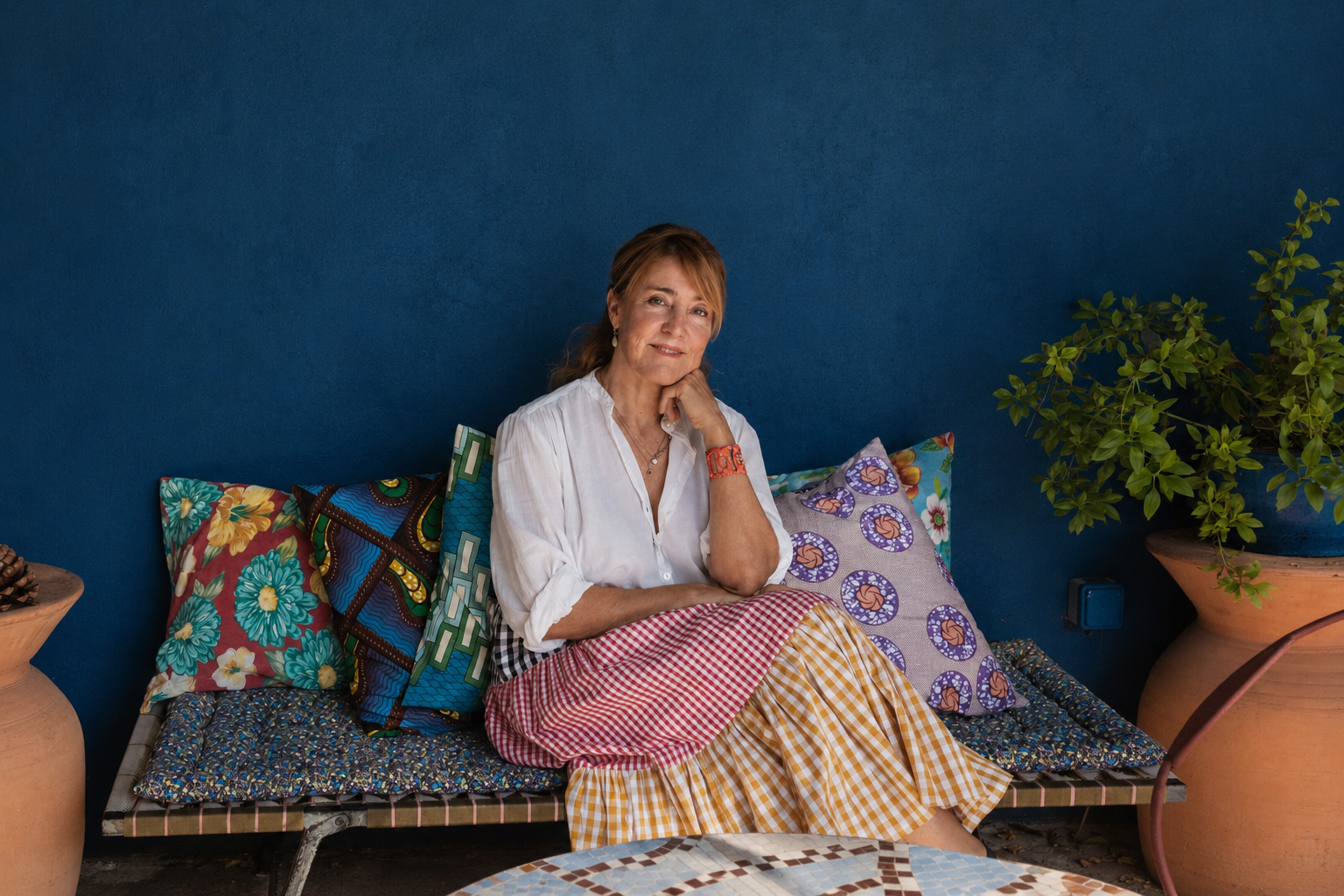
In Provence, Jeanne Bayol has built a world entirely her own. Trained as a stylist in Paris, she eventually returned to the region of her grandparents and great-grandparents, where over the years she has developed a creative world spanning clothing, interiors, objects, books and roulottes. Her boutique on the outskirts of Saint Rémy de Provence brings all of this together in a generous, loft-like space shaped as much by hospitality and conversation as by what is displayed there. In Bayol’s world, Provençal traditions blend naturally with influences gathered through years of travel and encounters. Her world continues to expand. An eighth book, devoted to Provençal lifestyle, is due in spring 2027, while in Arles she and her partner, Jean-Marie, have recently restored the Mas de Griffeuille, an old Provençal farmhouse painted by Van Gogh during his time in the city. Both projects extend the interests that have long shaped her work: place, memory, objects and the continuity of Provençal culture.
Colour seems to be the constant thread in your work. What does it represent for you, and how does your relationship with it change over time?
Colour is a fundamental part of my DNA. My world is profoundly colourful, and I love the world in colour. Whatever else changes, that thread remains: something joyful, open to others, and always connected to Provence. But my relationship with colour is not fixed. I go through periods — sometimes I am more drawn to yellow, sometimes to green. I think colour answers particular moments in our lives. It can restore us, bring energy, or simply reflect the season we are in. At other times, I am drawn to more autumnal tones, colours that feel closer to nature. For me, colour is connected both to the natural world and to how we feel physically and emotionally.
How do you choose the materials you work with, and how much does Provence shape those choices?
I love working with different fabrics — cotton, cashmere, damask — but because much of my work is made for the Provençal summer, I naturally choose materials that respond to the climate here. The heat is becoming more intense every year, so the fabric must feel light, breathable and comfortable against the body. That is one of the reasons I return so often to Indian cotton: it has a fineness and softness that works beautifully in summer. I use less linen, partly because it is already so present in Provence and others work with it very well, though I find it beautiful. And in winter, I am just as happy to work with a beautiful wool.
What is it about Provence that continues to inspire you so deeply?
Provence never ceases to inspire me. It is rich not only in what it is today, but in everything that has shaped it. It has always been a place of passage and exchange, yet it has kept a very strong identity of its own.
The Camargue is part of that story. Provence has long been crossed by Gitans travelling to Saintes-Maries-de-la-Mer in May for the celebration of Sara, the Black Virgin. I also think of the Marquis Folco de Baroncelli, who was deeply attached to the Camargue and to Provençal culture. He fought to preserve its landscape and traditions, including the Camargue bull, and he was a close friend of the Gitans. Later, Luc Hoffmann continued the work of protecting the Camargue. Today we still have extraordinary stretches of open landscape, beaches, flamingos, bulls and nature at the edge of Provence.
Painters came here too, and Van Gogh was overwhelmed by the light and the colour. That Provençal blue sky is extraordinary. You may find blue skies elsewhere, but here it is washed clean by the mistral, with its cypresses and olive trees. It is a landscape that feels both very strong and very gentle.
And then there are the Provençal markets. I am passionate about them; I could not live in a country without markets. I love the markets in Saint-Rémy and Eygalières, but the one in Arles is the most extraordinary to me. The whole of the Camargue seems to gather there, bringing together people, produce, clothes and colour. It is a place of exchange. I also simply love shopping there. Whatever the season, you find remarkable things — olives, melons, tomatoes, cheeses. I love to cook, and for me shopping at a Provençal market is a dream.
Provence has a strong identity, yet you often describe it as a place shaped by movement and exchange. How does that history enter your work?
Provence has always been a place of brassage and passage, with a very strong identity of its own. Greeks, Romans, Italians, Spaniards and, today, people from all over the world have all left traces here. You can still see that history in places like Glanum, just outside Saint-Rémy. What I love is that Provence has absorbed all these influences without losing itself. Its identity has remained very strong.
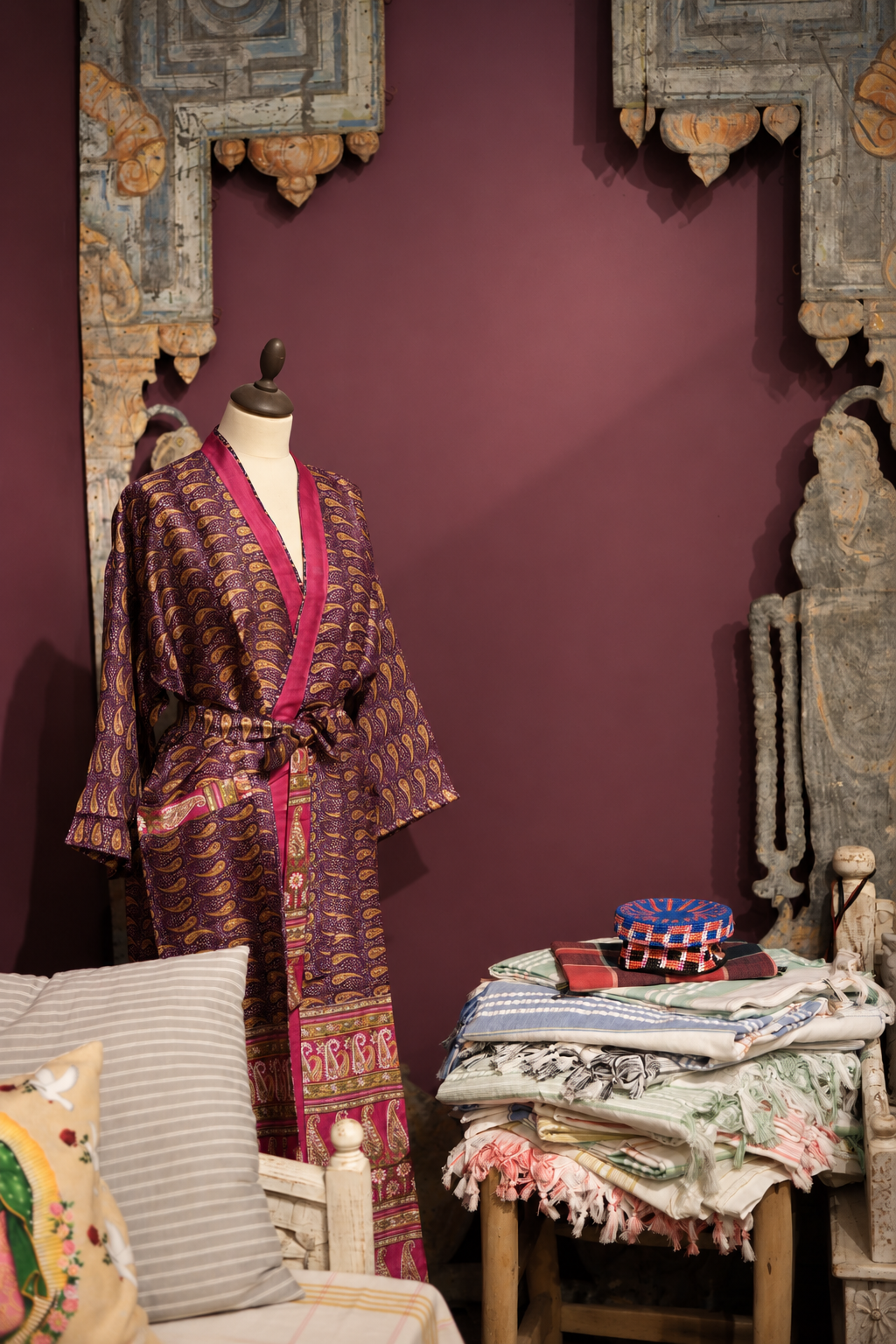
That history is present in my clothes too. I take inspiration from traditional Provençal dress and from the printed cottons associated with the region. Those fabrics themselves carry a much wider story: the indiennes that became part of Provençal visual culture were originally connected to India and arrived in Europe through long-distance trade.
So when I began working in India, it felt almost like following that history back in the opposite direction. It created a very particular connection for me between Provence and India — not as two separate worlds, but as places that have been linked through textiles, colour and exchange for centuries.
Your clothes are made in Provence and India. How do you keep the production small-scale and personal across both places?
I have no wish to produce in large series. I want unique pieces, or very small collections, that still carry the trace of the human hand. That matters enormously to me. In Avignon, I work with a reintegration workshop that I visit frequently, so I know exactly who is making the clothes and how they are being made. In India, particularly in Jaipur in Rajasthan, I follow the same principle. I choose small workshops rather than mass-production facilities, places where the work remains personal — where I meet the people who work there and know the owner personally. For me, the process is as important as the finished piece.
Travel has always been part of your life. Which places have stayed with you most strongly?
Travel has always been very important to me. About 35 years ago, my husband and I bought a motorbike in India and travelled across the country, covering 15,000 kilometres in five months. I love discovering other places too. I adore Mexico, especially for its embroidery, and I love Brazil, where we have friends. I also love Romania, Switzerland, Italy and Spain. My inspiration comes from travel and from the people I meet. Wherever I go, I bring back objects and ideas. And through all of it, there is always one constant thread: colour.
Your boutique feels less like a conventional shop and more like a place to stay awhile. What do you hope people find there — and how do you want them to feel when they leave?
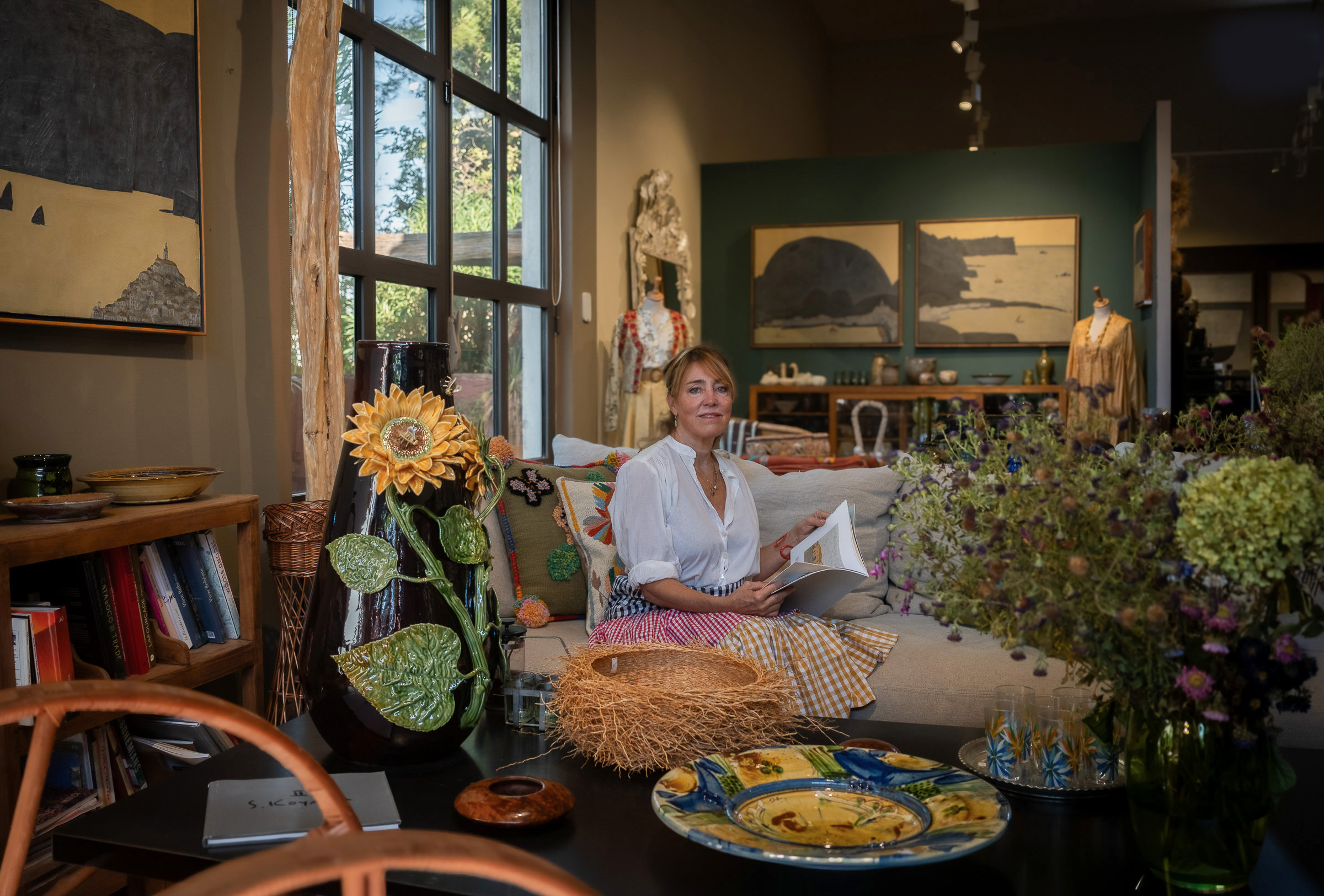
I think people come here because the boutique is a little out of the ordinary. We are outside the centre of Saint-Rémy, in a large space with a courtyard, and I want it to feel welcoming, almost like a home — somewhere people can take their time, talk and share a moment, rather than simply come in to buy things. In summer, it is not unusual to find ten or fifteen people around the table having coffee in the morning. People come and go, everyone brings their ideas, and that sense of exchange is very important to me.
What I want people to feel above all is joy and happiness. I want them to be glad to come here and to discover something different. We live in a time of increasing uniformity, in fashion and beyond, where shops, interiors and clothes can begin to look the same everywhere. I like offering an original idea, something that touches someone and that they genuinely want to take home.
Of course, women also come for the clothes. I work in very small collections and one-off pieces, so they know they are unlikely to see the same dress everywhere else.
If you had to choose what best represents your style today — an object, a garment, a colour — what would it be?
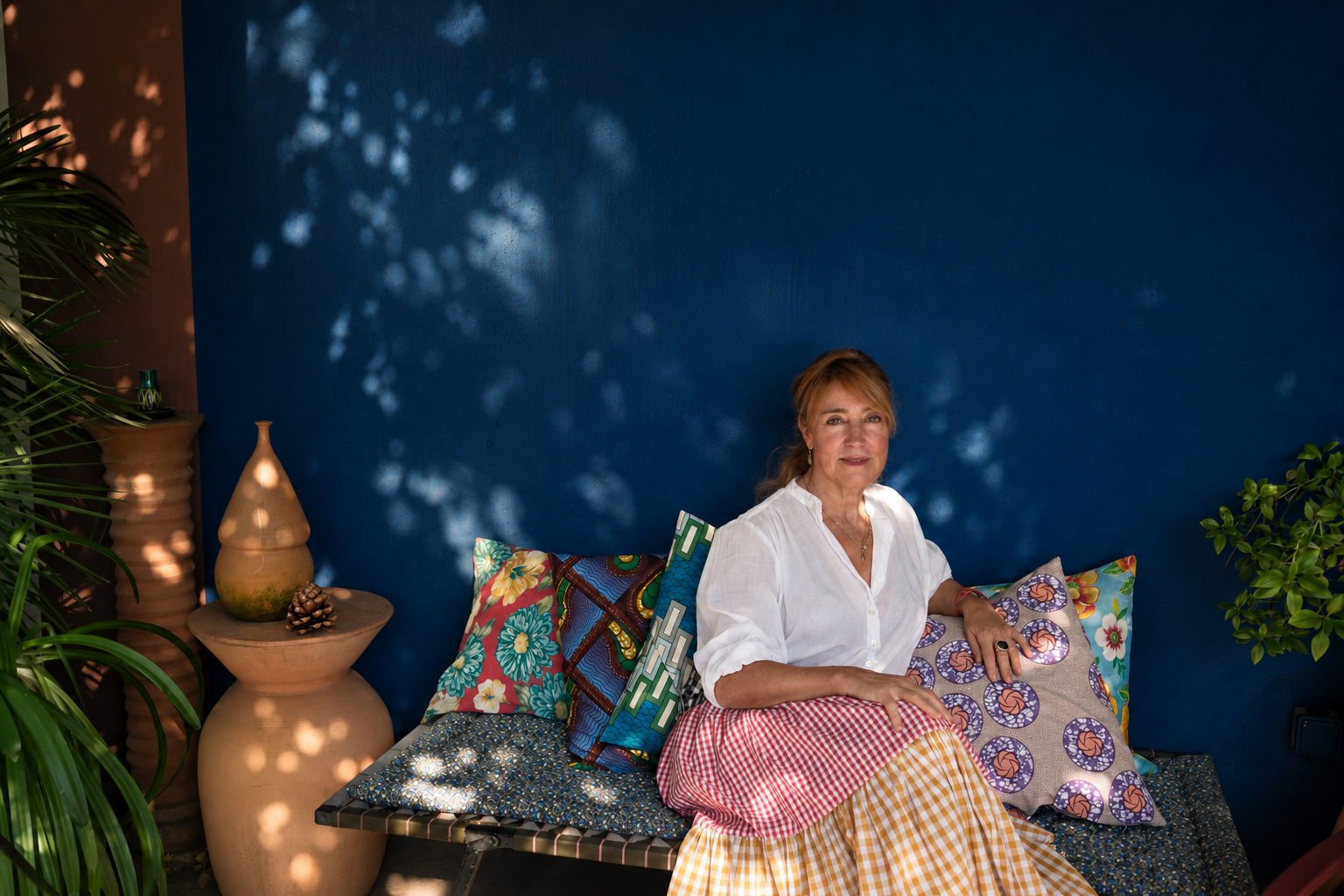
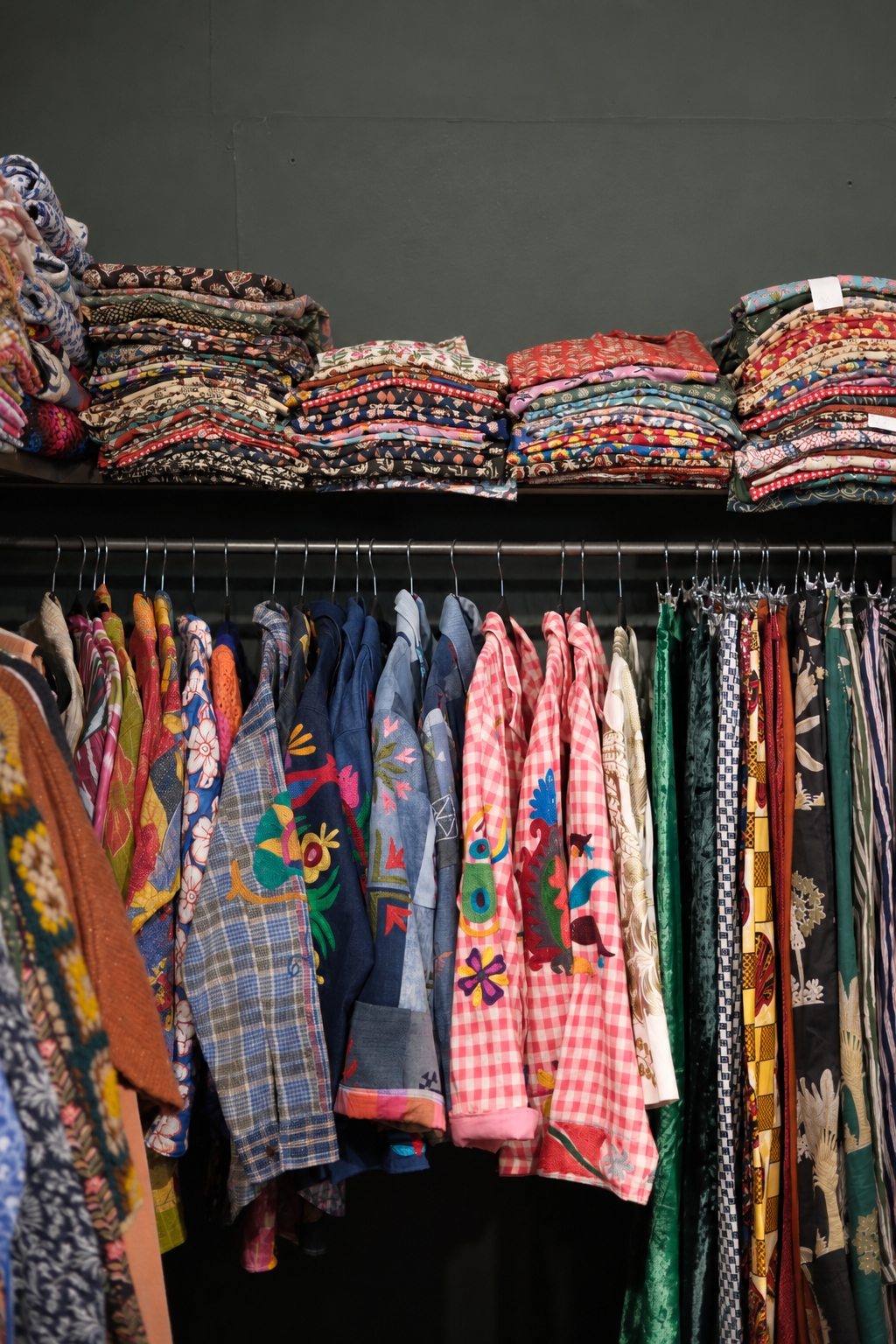
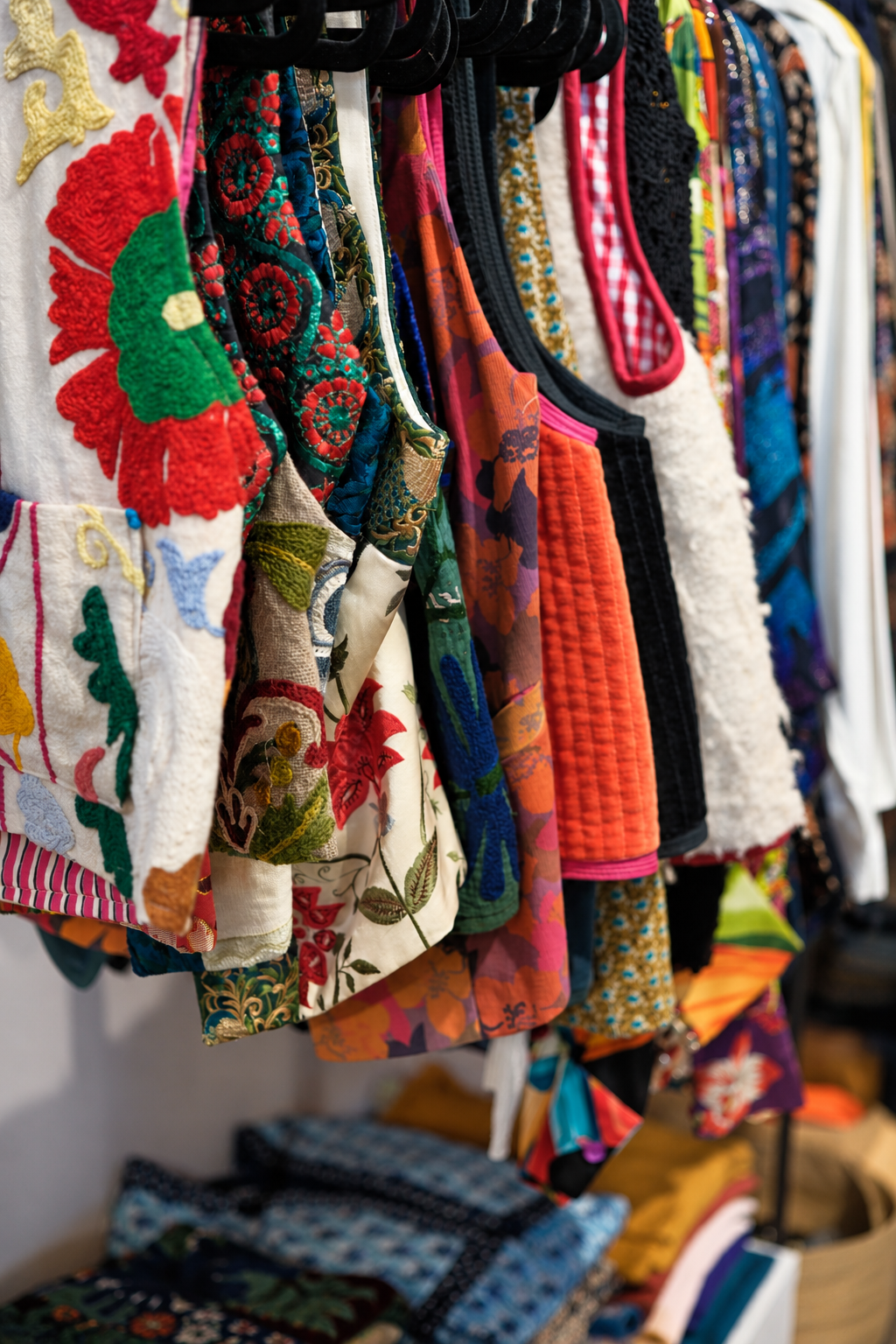
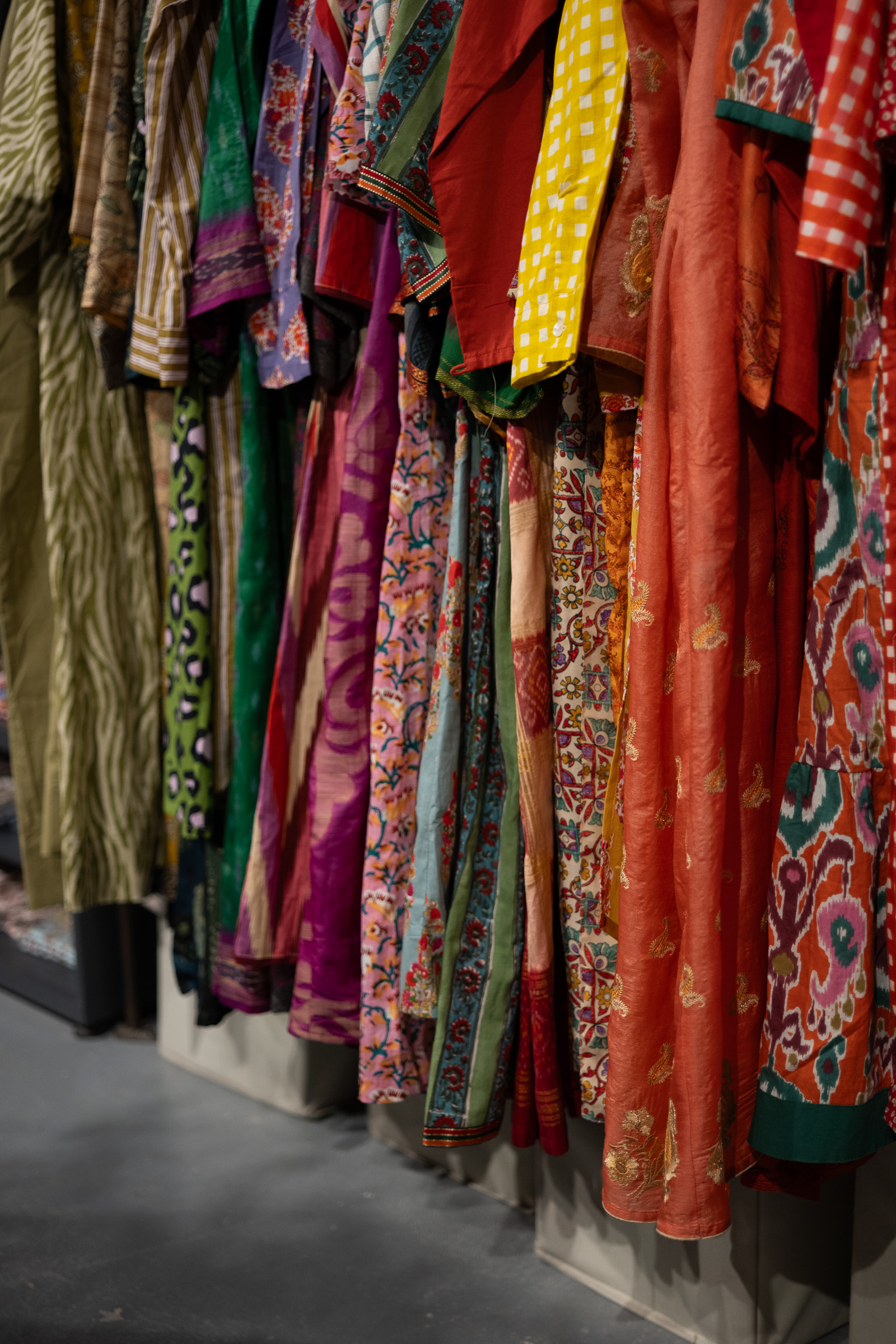
That is almost impossible for me, because I love so many things. It is like choosing a pair of espadrilles: I want all six colours! I love the embroidered cushions, the hats, my clothes, the embroidered waistcoats made as unique pieces from antique textiles, and the Indian cotton dresses because no two are ever quite the same. Everything in the boutique is there because I chose it.
If I had to come closer to defining my style, I would probably say the skirts and the dresses. I make clothes that are easy to wear and that adapt to different women: slender or fuller, tall or petite. I do not want my clothes to belong to only one kind of woman.
Beyond the clothes, how do you build the rest of the boutique’s world?
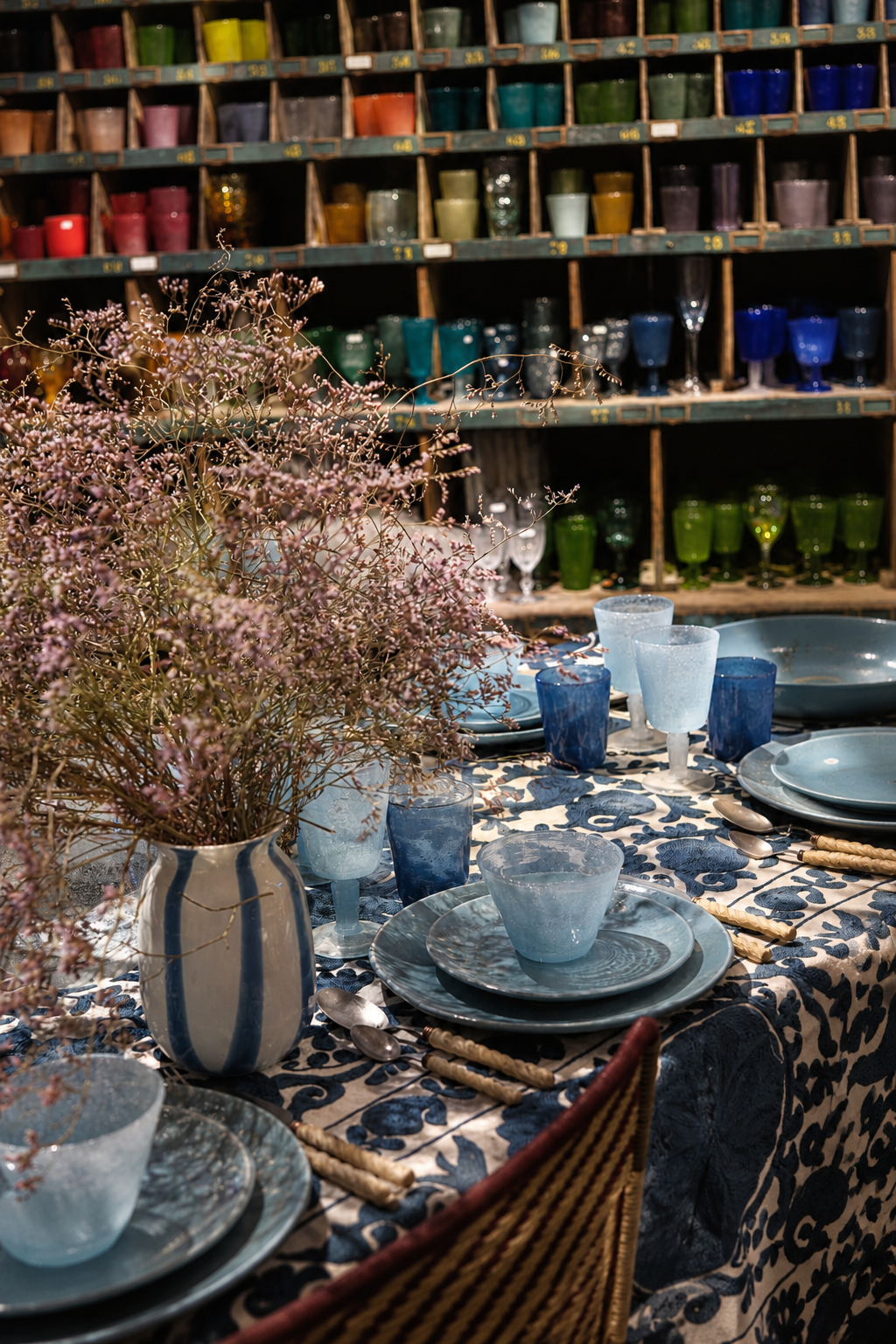
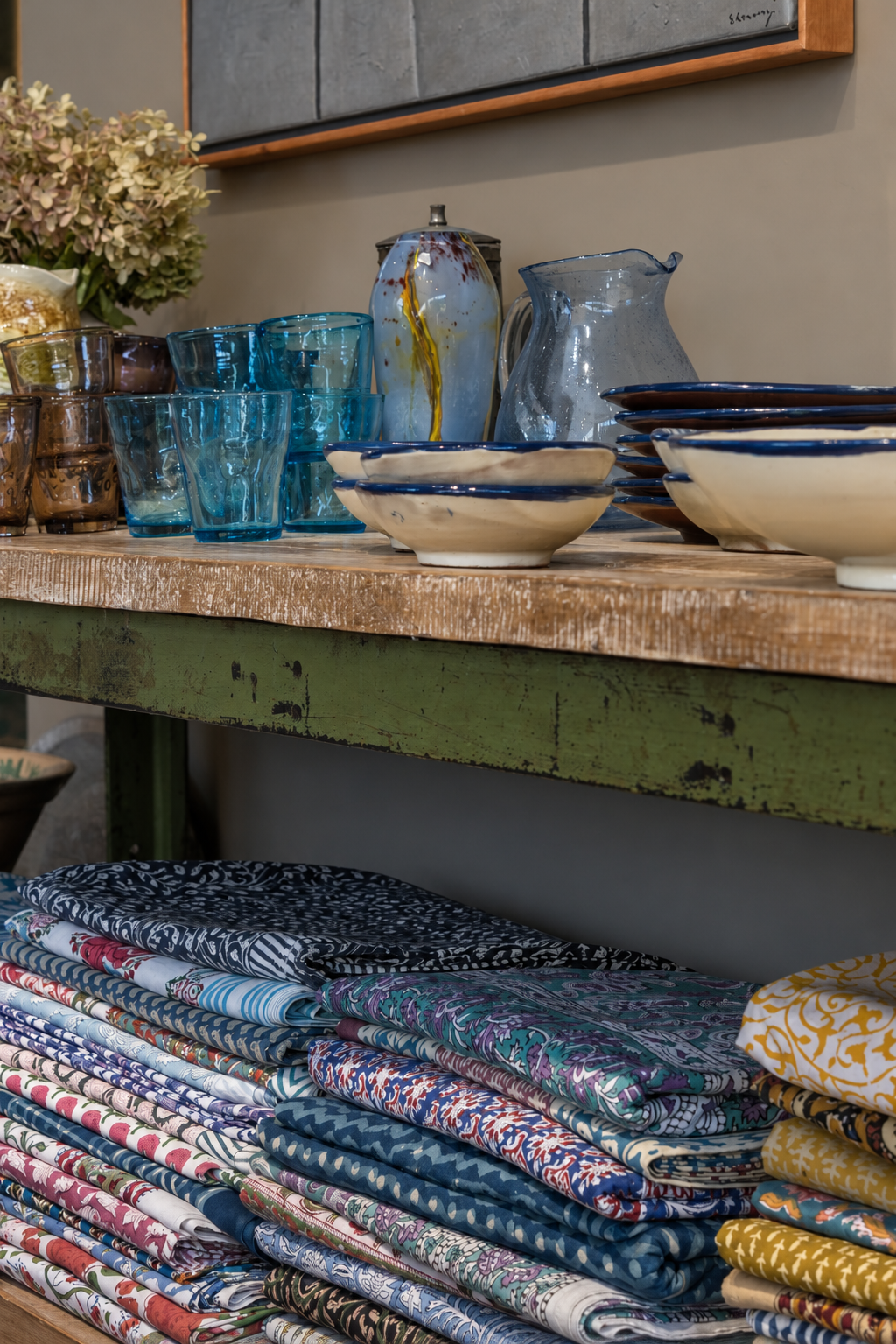
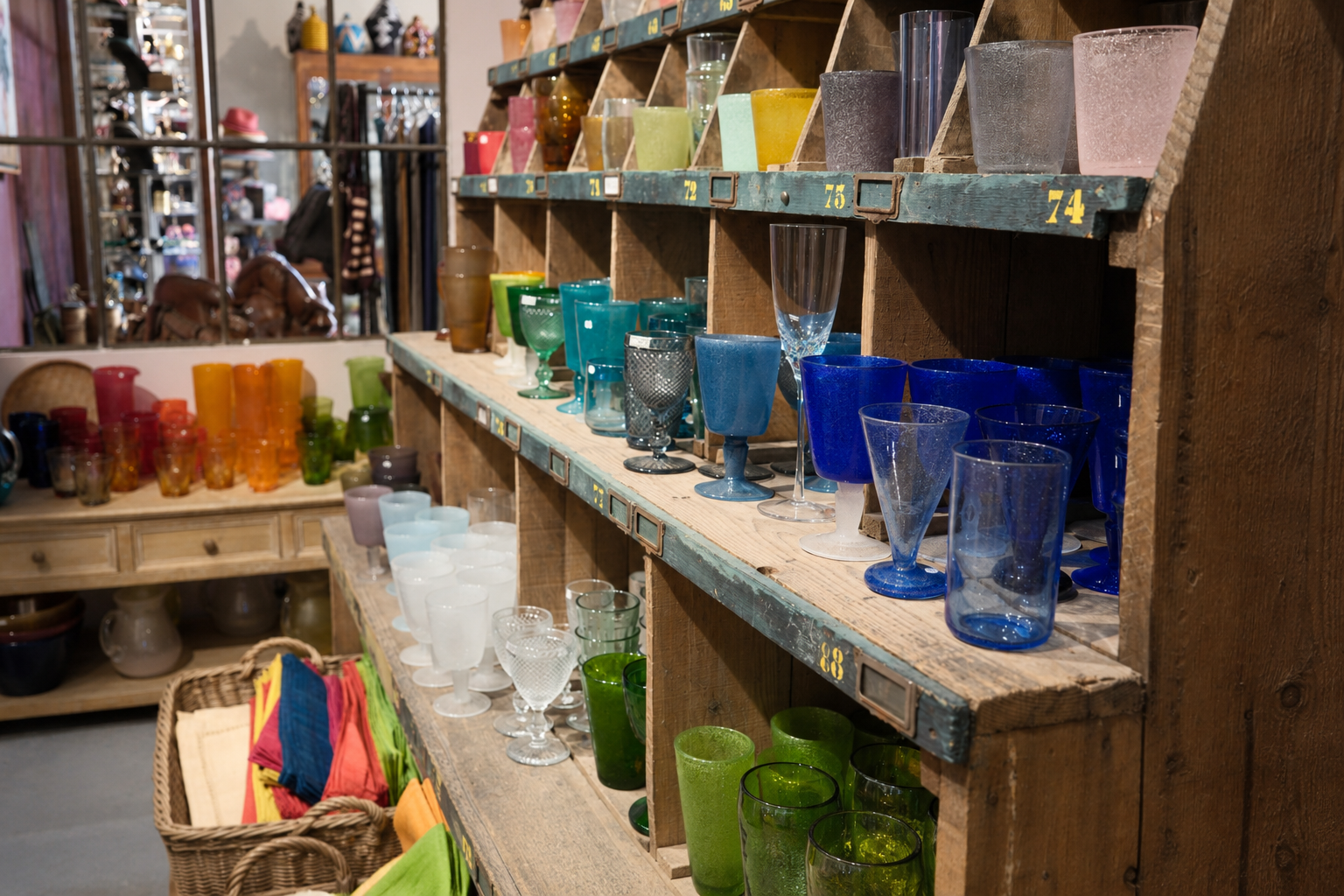
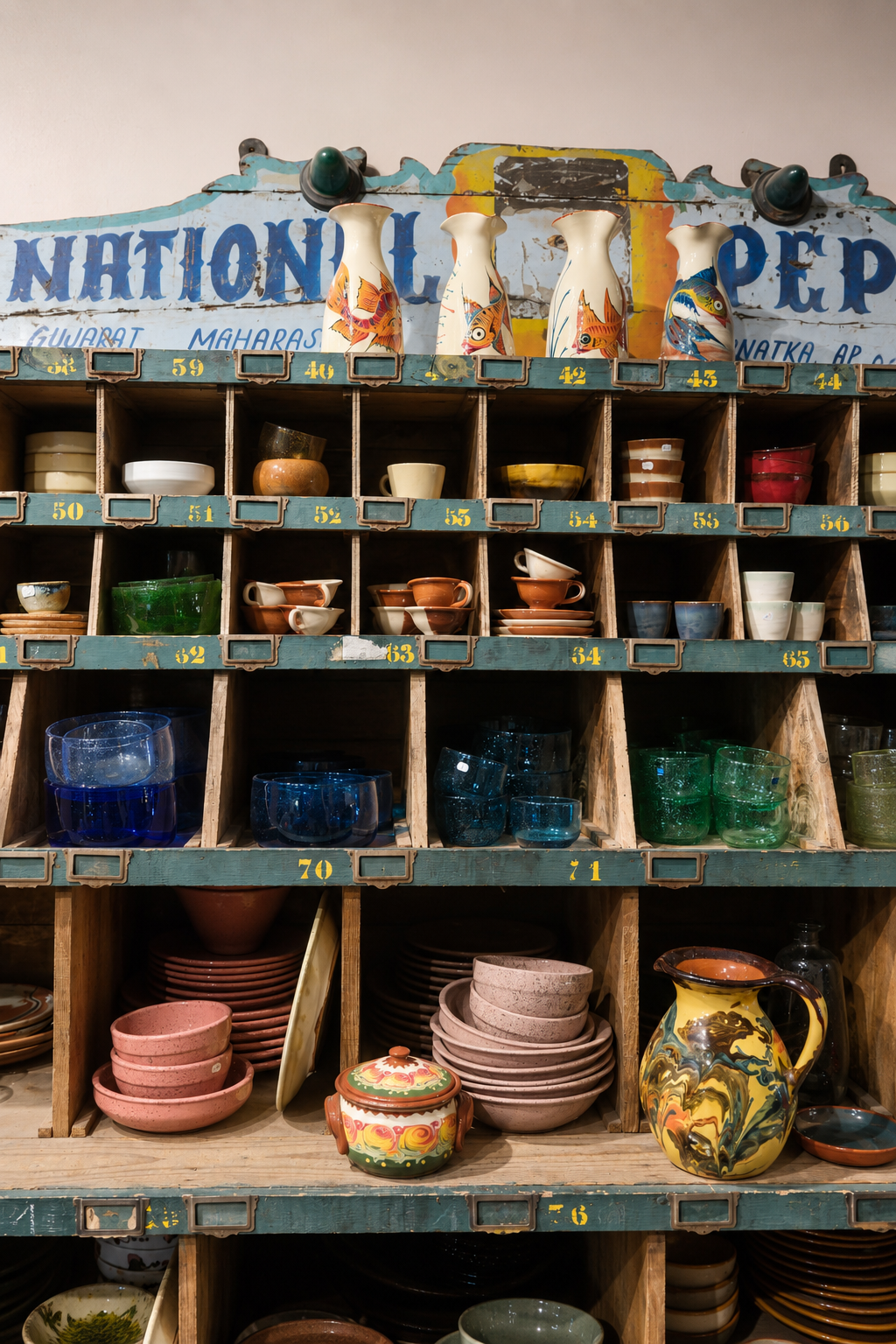
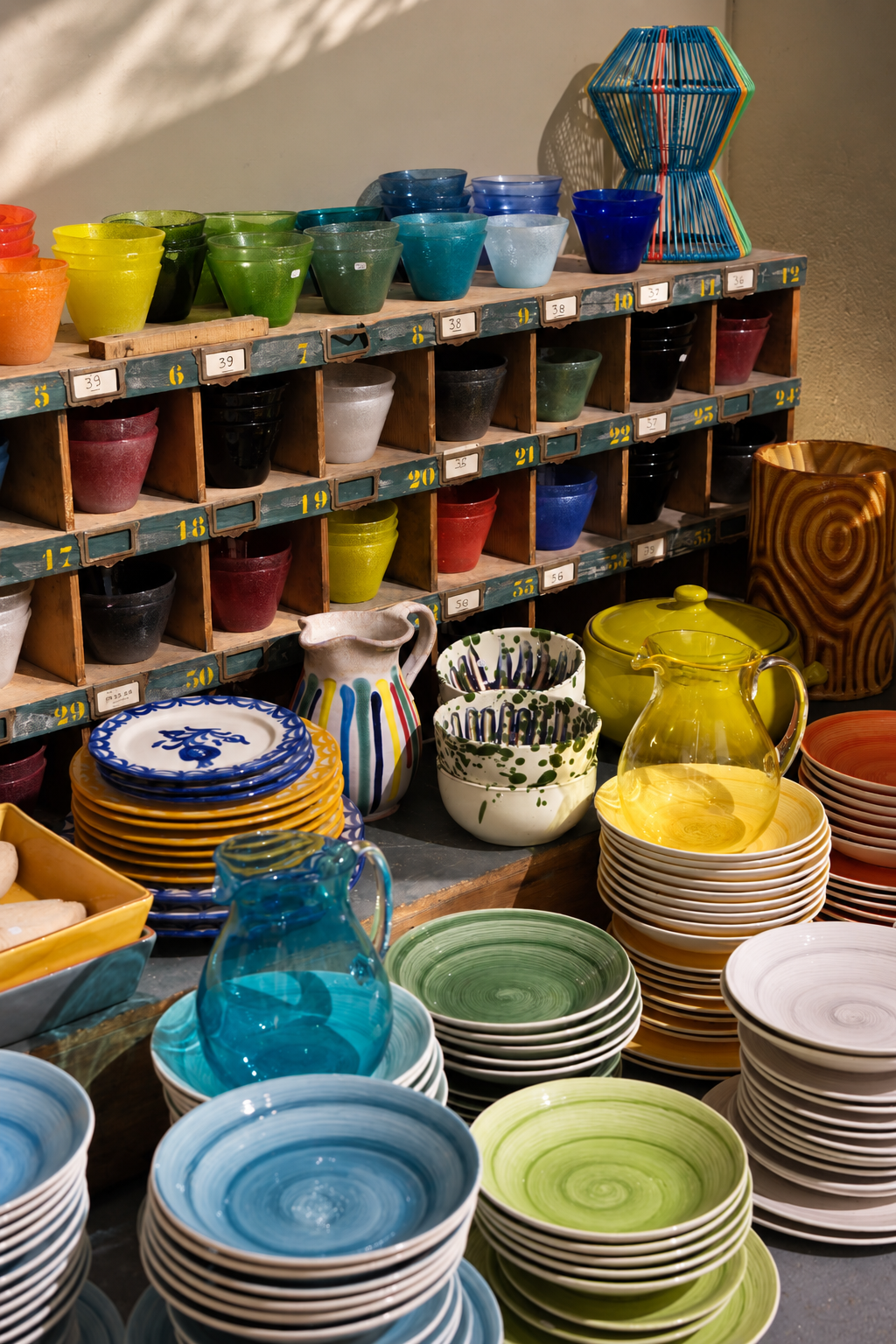
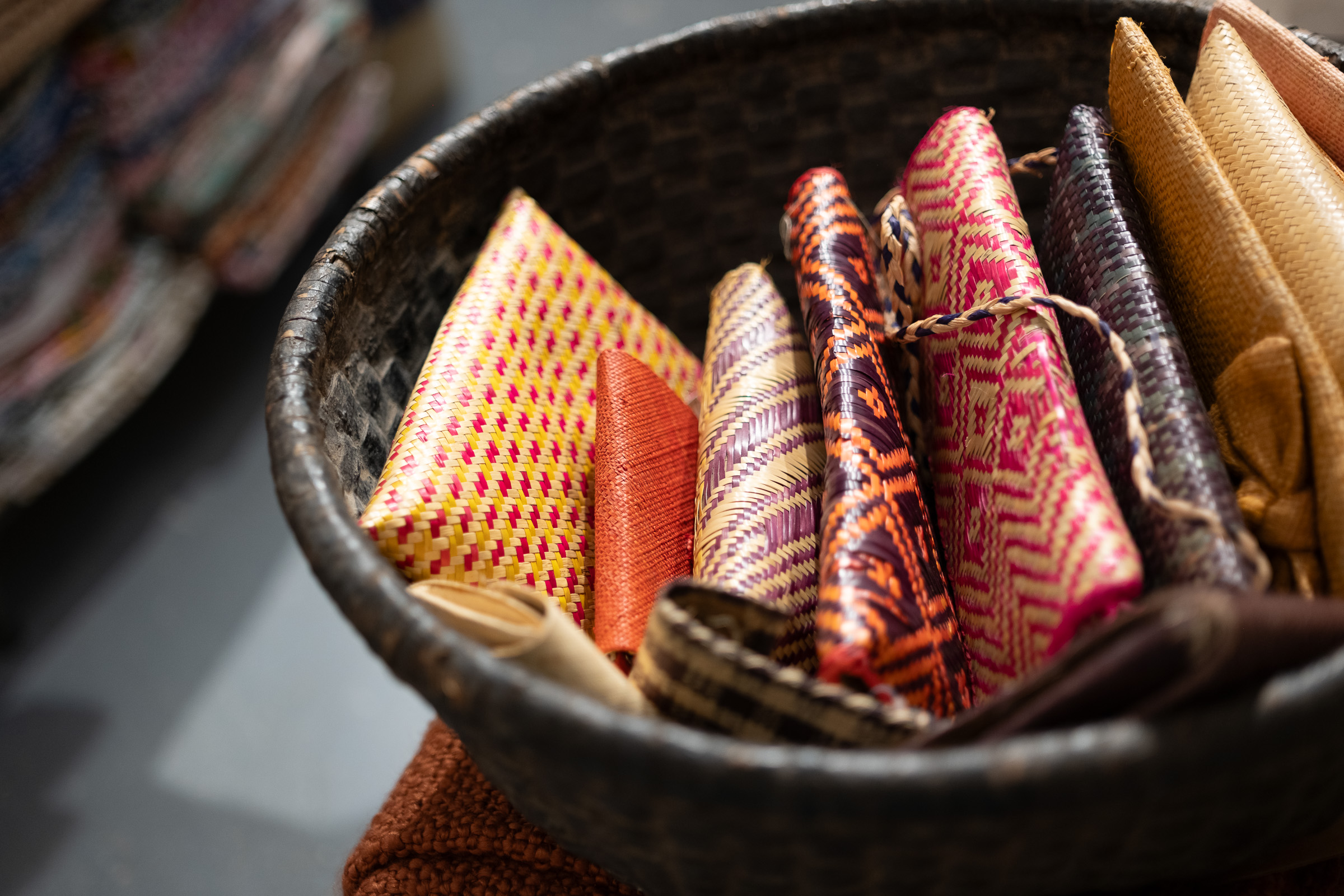
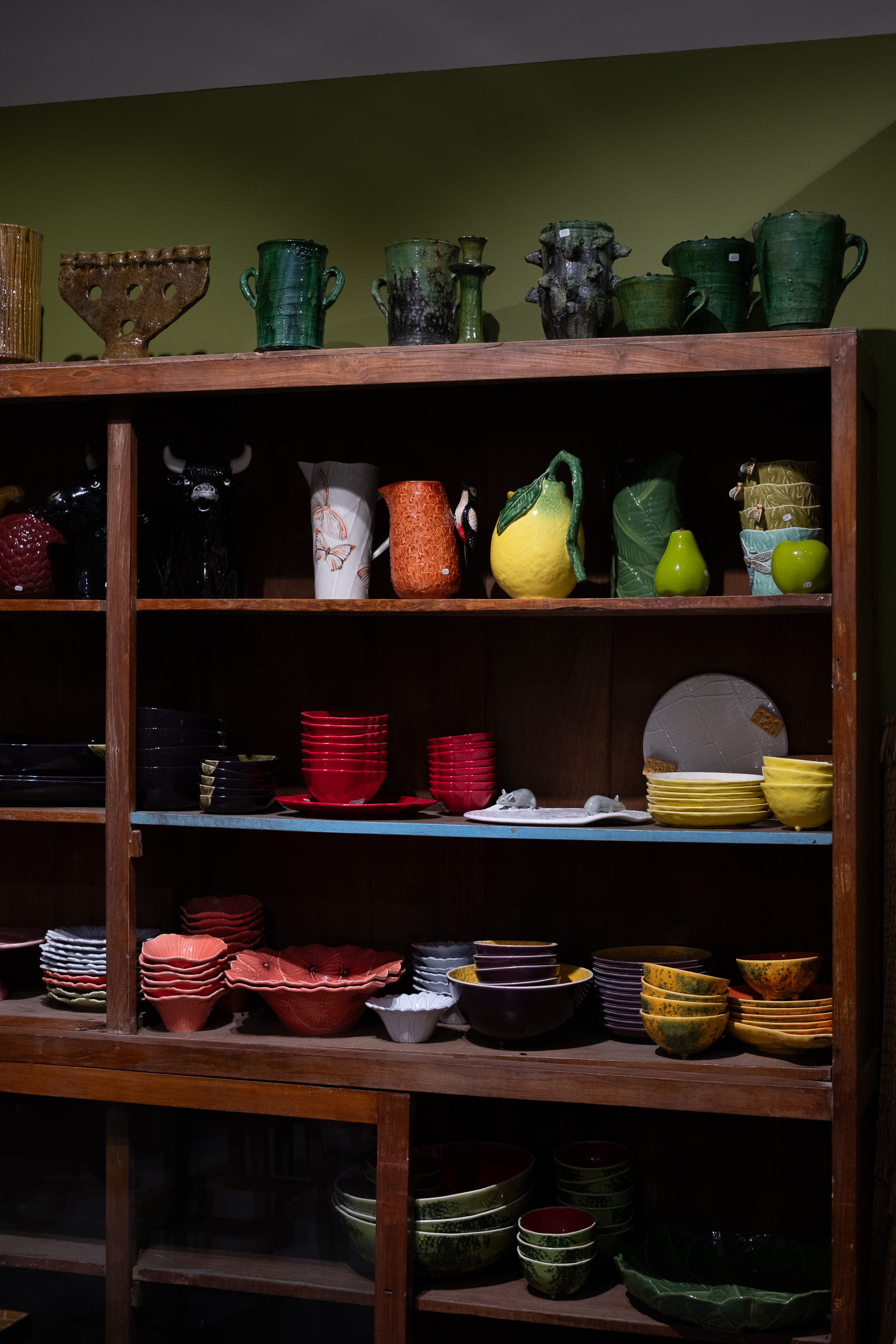
I have a very personal selection of jewellery, sourced from French and international artists and designers. It is the same with objects. I adore tableware because I love the art of setting a table. I have pieces from many different places: some I have made, others are traditional Portuguese pieces, such as Bordallo, alongside traditional Provençal ones. And then there are the textiles — antique fabrics, cushions, rugs. I do not want the boutique to be limited to Provençal things. I choose what interests me from each country because I believe every place has something beautiful to offer. What I always look for, above all, is craftsmanship.
You bring together objects from very different periods and places. What makes something beautiful to you, and what allows such different pieces to work together?
For me, an object becomes beautiful when you can feel that someone has made it, and when it carries a sense of transmission. I can love an old piece that has really lived just as much as a contemporary one, as long as it speaks to me.
There is also the immediate emotion of looking at something. Here in the boutique, for example, there is a vase with sunflowers that I find extraordinary. The craftsmanship is remarkable, but there is also simply the beauty of the object itself — that moment when you look at something and feel dazzled by it. Instinct and craftsmanship can exist completely together.
And I believe objects from different periods and origins can live together in the same way. You can place a sixteenth-century piece beside something from the twentieth. If each object is beautiful and chosen with a certain eye, they naturally begin to relate to one another.
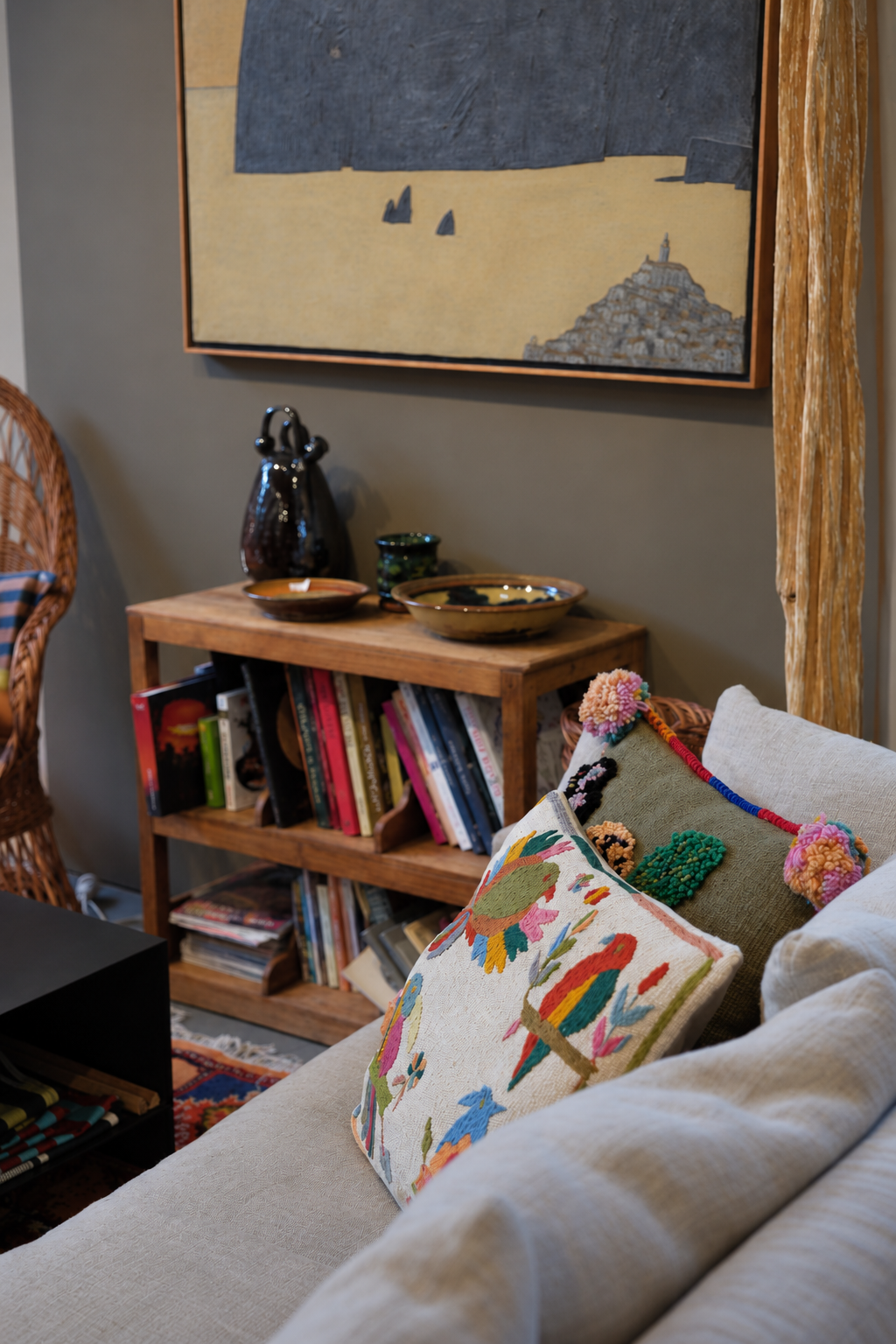
Here I have a contemporary table, an old ceramic piece, glasses from the 1970s, cushions embroidered in Afghanistan, and works by Koyama, a Japanese artist I greatly admire. They are very different, but there is always a common thread: a love of beautiful objects, craftsmanship and colour. That is what allows everything to sit together.
Your fascination with roulottes is very distinctive. What first drew you to them, and what do they represent for you?
I have loved travelling since I was a child and have always wanted to discover new places. For me, the roulotte is a kind of motionless journey. It is like a small house, but also a place for dreaming — somewhere you can sit and imagine that you are travelling even while remaining still.
I decorated each roulotte differently, and later had some built in Romania. That led me further into the history of the Tsiganes, a people whose culture of travel and displacement has always fascinated me.
We also wanted to follow that history back towards India, particularly the Indus Valley, and to understand the routes that later led through Romania, Greece and Egypt. That connection between India, travelling communities, Romania and Provence became an important part of what drew me to the roulottes in the first place.
What does it mean to you to still live in the house that belonged to your grandparents?
We still live in the family house beneath the plane tree, but the way we live there has changed. My grandparents were farmers, and my grandfather would never have eaten outside. He spent the whole day working in the fields, so when he came home, he wanted to be indoors. We are the opposite: because we do not work the land, we would happily eat outside all year.
When we were children, we walked from my parents’ house to my grandparents’. My own children later made the same journey in reverse, from our house to my parents’. There is a strong sense of continuity in that — a thread that keeps passing from one generation to the next.
After all these years, what has remained unchanged in the way you create?
The pleasure of bringing things together, of mixing them, and of keeping colour as the thread running through everything. And the pleasure of meeting new people. Making clothes is also about meeting the people who will eventually wear them. That is still what moves me.